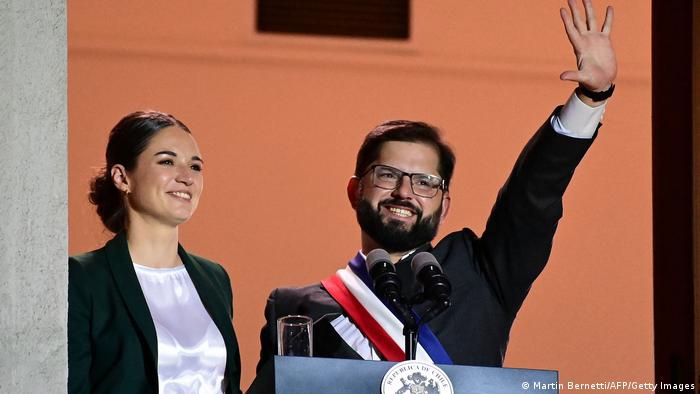
On March 11, Gabriel Boric was sworn in as Chile’s President. The 36-year-old former student activist and two-term congressman wrapped up a moving inaugural address by quoting Salvador Allende, the widely-revered, democratically-elected socialist President toppled during Augusto Pinochet’s U.S.-backed military coup in 1973.
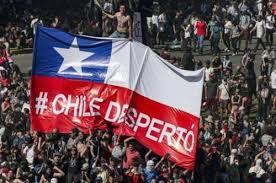
Across the country, Chileans celebrated a historic moment of change that has been years, even decades, in the making. Boric takes power in the wake of 2019’s Estallido social (social uprising), where a vast confluence of groups (students, feminists, Indigenous groups, labour unions, workers, environmental activists , etc.) filled the streets all over the country for months-long protests against deep-rooted inequalities in wealth, healthcare, education and pensions. The movement won significant gains: Chileans have since selected 155 delegates to replace the existing constitution, written by Pinochet’s dictatorship, with a greener, more inclusive, and more democratic version. Meanwhile, Boric heads the first truly progressive government since Allende.
Early on in his campaign, with typical lofty oratory, Boric articulated his core political goal: “If Chile was the cradle of neoliberalism, it will also be its grave.”
Today, in North America and much of Western Europe, it’s impossible to understand the environment of extreme wealth inequality, political polarization, economic insecurity, and bottomed-out trust in institutions without tracing directly back to the emergence of neoliberalism in the 1980s, when Ronald Reagan, Margaret Thatcher, and other Western leaders declared war on the welfare state. Carving up public institutions and labour unions, they handed over the delivery of services to profit-driven, unaccountable corporations. In the 1990s, traditionally left-leaning parties like Bill Clinton’s Democrats and Tony Blair’s Labour Party joined in, signing free-trade agreements that would skewer the working class, grant multinational companies unchecked power, and ensure neoliberalism would define the global economy for decades to come.
The template for this model? Chile. Through the 1970s, as the military dictatorship tortured, killed, and disappeared dissidents, a group of young, U.S.-educated economists called the “Chicago Boys” dismantled Allende’s economic project, privatizing education, social security, healthcare, and pensions while selling off and deregulating previously-nationalized industries to multinationals. The International Monetary Fund and the World Bank swooped in with predatory “structural adjustment” programs. Inequality skyrocketed: burgeoning numbers of poor people faced breadlines and homelessness, while a group of mega-winners formed a new economic oligarchy that would help prop up the dictatorship.
Although Chileans recovered democracy in 1987, the economic system remained intact. If anything, neoliberalism gained a measure of democratic legitimacy. Outgoing President Sebastian Piñera, for example, is a billionaire with close family ties to Pinochet. His decision to criminalize the initial protests in 2019 played a major role in kickstarting the Estallido social. He left office with approval ratings of about 15 percent.
Boric has repeatedly mentioned wanting to finally turn the page on Pinochet’s legacy. The fact the this moment arrives over 30 years after the end of dictatorship show just how deep the cuts go. It’s no coincidence Boric’s generation of activists, the ones leading the charge, grew up in a post-dictatorship era: no tienen miedo. The great privilege of growing up in democracy is the absence of fear.
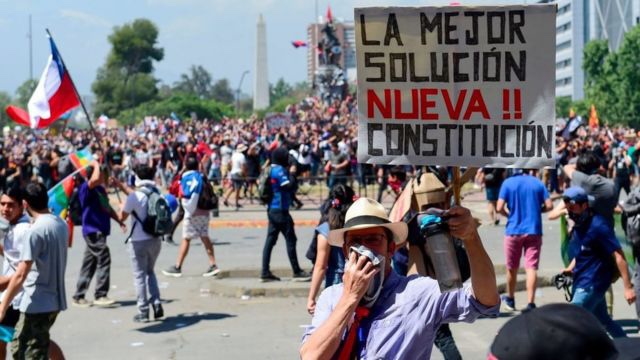
In talking to Chileans, this generational divide is evident. For young people, long disillusioned by a rigged game, there’s enthusiasm and expectation for Boric’s government. The older generation seems more measured, occasionally even cynical. Some, no doubt guided by the traumatic past, fear the potential consequences of too much change too quickly. Others see the dynamics of wealth inequality as too deep, too powerful, and too corrupt to truly be reformed.
To get a sense of the scope of the challenge lying ahead, it’s useful to size up Boric’s pledge to place the environment at the heart of his reform. In a country hugely dependent on natural resource extraction, his government will face powerful resistance from big industry. In the country’s north, Canadian mining companies pillage resources and take most profits home. In the south, Norwegian salmon fisheries pollute the waters. In between, multinational corporations run export-driven mono-plantations that suck the land dry, depriving local communities of access to drinking water. The Chilean avocado, a dietary staple here, costs less in Vancouver than in Valparaiso.
The challenges facing Boric’s team are as large as the expectations. A feminist, environmentalist government aiming for historic social change is made up of young people with little governing experience in a fragmented political climate. Boric only narrowly defeated hard-right opponent Jose Antonio Kast, a Pinochet supporter who denied the climate crisis, derided the rights of women and LGBTQ groups, and wanted to build ditches along the northern border the keep immigrants out.
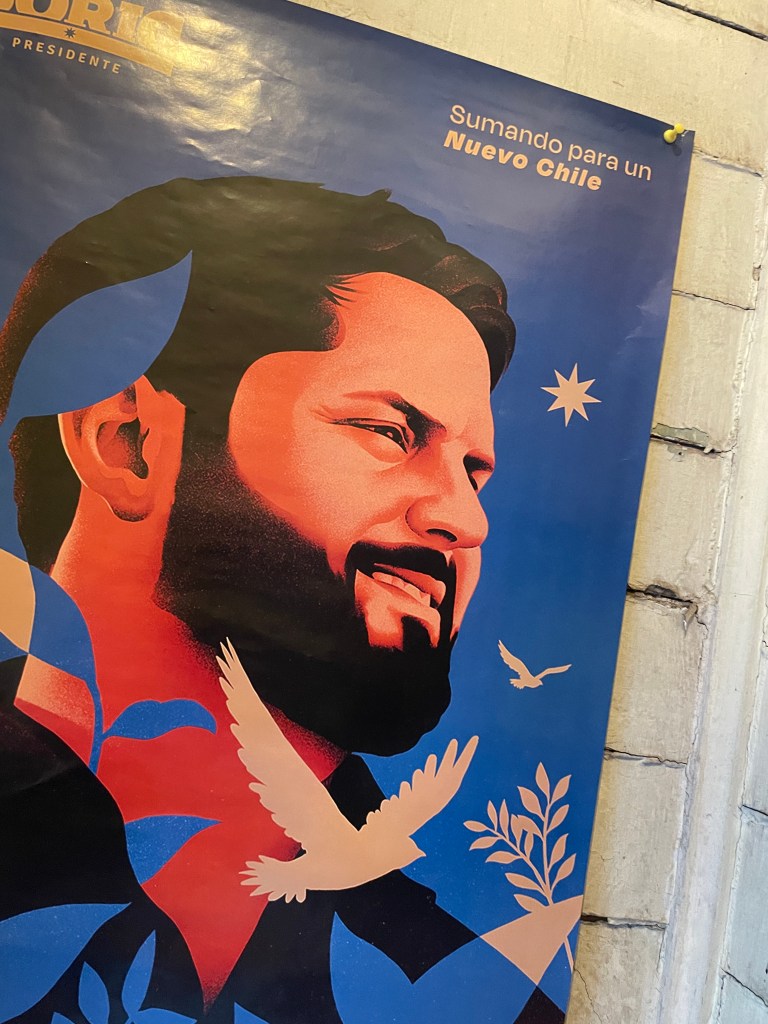
But, there’s hope – hope that a new constitution could go a long way in overcoming the dictatorship’s neoliberal legacies by creating a more equitable, decentralized economic and political model. Chile’s political moment also comes during a wider political shift across South America. Most countries on the continent also suffer from histories of U.S.-sponsored military and economic violence through dictatorships and neoliberal policy, while the wide-ranging effects of COVID have reinforced the need to establish more economic autonomy from the West, reduce extreme wealth inequality, and tackle climate. There has been a recent swing left in Bolivia (after 2020’s right-wing coup), Peru, and Argentina, with big expectations for upcoming elections in Colombia and Brazil.
Today, Chile has a chance to build a new a better future for its citizens, and help chart a path forward for its neighbours. Let’s watch closely.
 Gilbert Coyle